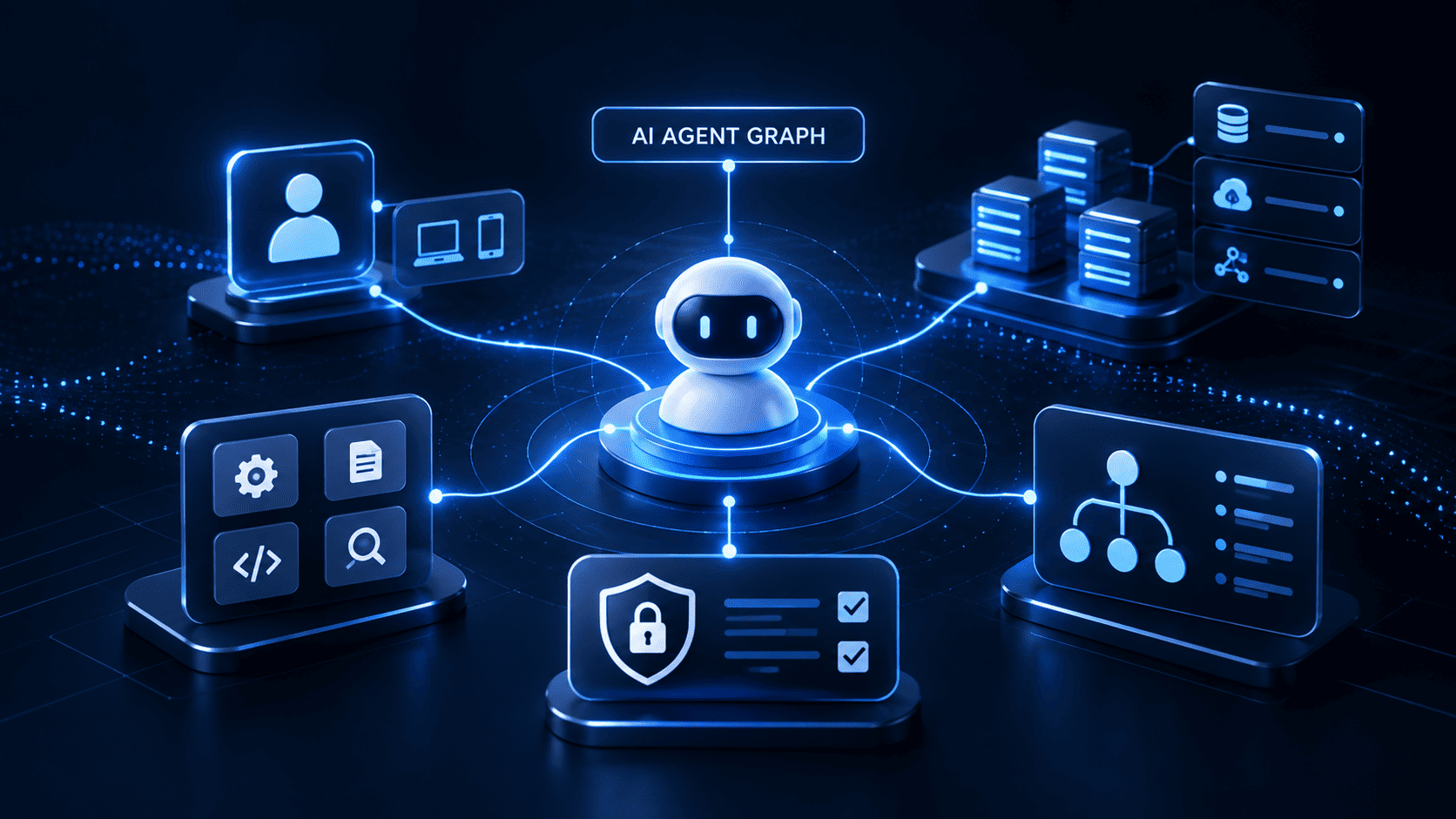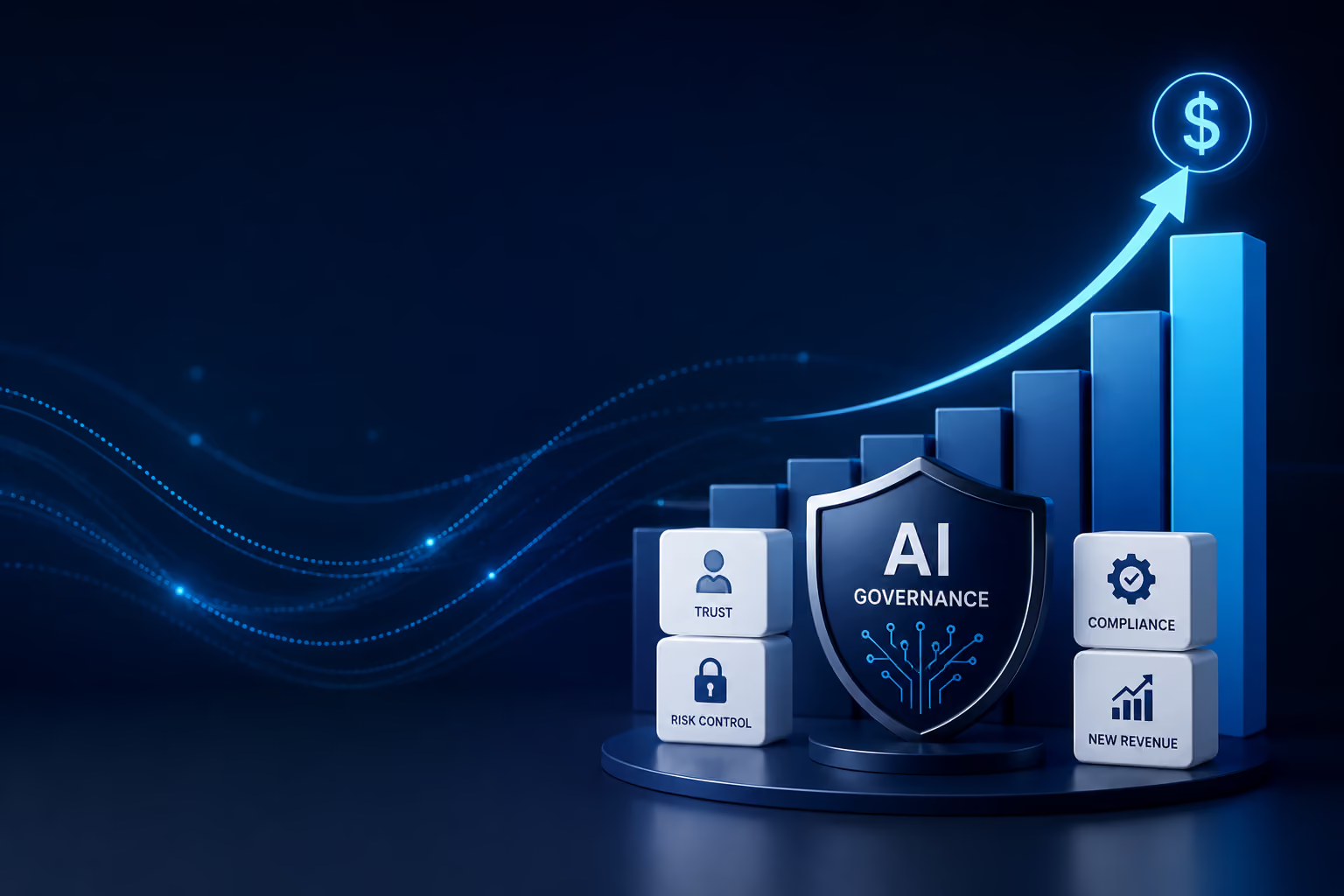
AI is the greatest opportunity of our time—and one of the biggest risks we can't ignore

Every generation experiences a technological shift that fundamentally changes how businesses operate. The internet transformed communication. Cloud computing transformed software delivery. Mobile technology transformed accessibility. Artificial Intelligence is poised to transform everything.
Unlike previous technology waves, AI is not limited to a single department, function, or industry. It has the potential to impact every employee, every business process, and every customer interaction. The opportunities are enormous. But so are the risks.
As organizations race to embrace AI, many are discovering that innovation is moving faster than governance, security, and organizational readiness. The challenge facing business leaders today is not whether to adopt AI. The challenge is how to adopt AI responsibly.
Why AI is different
Many technologies improve existing processes. AI has the potential to redefine them. Organizations are already using AI to generate content and marketing campaigns, improve customer service, analyze large datasets, automate repetitive tasks, accelerate software development, improve decision-making, and increase employee productivity.
In many cases, AI can compress hours of work into minutes. This level of productivity gain is difficult for businesses to ignore, which is why AI adoption is accelerating across organizations of every size.
The competitive advantage is real
Businesses that successfully adopt AI are seeing measurable benefits.
Increased Productivity — Employees can automate routine tasks and focus on higher-value work. Instead of spending hours gathering information, drafting documents, or creating reports, teams can leverage AI to accelerate execution.
Faster Decision-Making — AI can help leaders analyze large volumes of information quickly and identify patterns that might otherwise go unnoticed, improving responsiveness in a rapidly changing market.
Enhanced Customer Experience — Organizations are using AI to provide faster support, personalized recommendations, and more efficient customer interactions.
Greater Innovation — AI lowers barriers to experimentation. Teams can test ideas, create prototypes, analyze markets, and launch initiatives faster than ever before.
Businesses that effectively leverage AI will likely gain significant advantages over competitors that hesitate.
The risk side of the equation
Despite its benefits, AI introduces a new category of organizational risk. The same technology that improves efficiency can also create vulnerabilities when used without oversight.
Data Exposure Employees often share information with AI systems without fully understanding how that information is processed or stored — customer information, financial records, legal contracts, product plans, internal documentation, and intellectual property among it. Without clear guidelines, organizations may unintentionally expose sensitive information.
Lack of Visibility One of the biggest challenges organizations face is simply understanding how AI is being used. Employees can access AI tools in minutes without involving IT or security teams, so leadership often lacks visibility into which AI tools are in use, who is using them, what data is being shared, and how frequently AI is being utilized. This creates a governance challenge that many organizations are only beginning to recognize.
Compliance and Regulatory Concerns Regulators worldwide are paying closer attention to AI usage. Organizations operating in regulated industries must consider data privacy requirements, industry regulations, auditability, record retention, and accountability for AI-generated outputs. Compliance frameworks will continue evolving as AI adoption grows.
Inaccurate or Unverified Outputs AI systems can be remarkably helpful. They can also be confidently wrong. Organizations that rely on AI-generated information without appropriate review processes may expose themselves to operational, legal, or reputational risk.
The real challenge is not AI
Many discussions about AI focus on the technology itself. The real challenge is organizational readiness. Successful AI adoption requires organizations to answer several important questions: Do we have visibility into AI usage? Have we established governance policies? Are employees trained appropriately? Do we understand our risk exposure? Can we enforce acceptable use guidelines?
Technology alone cannot answer these questions. Leadership, governance, and culture play equally important roles.
Why AI governance matters
Some organizations view governance as something that slows innovation. In reality, governance enables sustainable innovation. Effective governance provides clarity (employees understand what is acceptable), consistency (teams follow common standards across the organization), accountability (organizations can measure, monitor, and improve AI usage over time), and confidence (leadership gains the assurance needed to support broader AI adoption).
The goal of governance is not restriction. The goal is responsible enablement.
The future belongs to organizations that balance innovation and risk
Businesses often struggle when they view innovation and risk management as competing priorities. The most successful organizations understand that both are necessary — too much caution slows progress, too little governance creates unnecessary exposure.
The organizations that thrive will be those that encourage innovation, maintain visibility, implement practical guardrails, continuously evaluate risk, and adapt as technology evolves. This balanced approach allows businesses to move quickly without losing control.
A leadership conversation, not just an IT conversation
AI is often introduced through technology teams. Its impact, however, extends far beyond IT, touching operations, marketing, sales, customer service, finance, human resources, and product development. As a result, AI governance cannot be treated solely as a technical initiative. It must become a business initiative, with executive leadership playing a critical role in defining how AI will be adopted, governed, and measured across the organization.
What forward-thinking organizations are doing today
The organizations making the most progress with AI are taking a structured approach. They are:
- Building Visibility First — Understanding where and how AI is being used.
- Developing Practical Policies — Creating clear guidance for employees.
- Training Teams — Helping employees use AI responsibly.
- Monitoring Usage — Maintaining awareness as adoption evolves.
- Continuously Improving — Treating AI governance as an ongoing process rather than a one-time project.
This approach creates a foundation for long-term success.
The next decade will belong to AI-enabled organizations
We are still in the early stages of AI adoption. The organizations that begin building governance frameworks today will be better prepared for the opportunities ahead, as AI increasingly becomes embedded into business applications, customer interactions, workflows, decision-making processes, and security operations.
The question is not whether AI will transform business. The question is how prepared organizations will be when it does.
Final thoughts
AI represents one of the most significant business opportunities of our lifetime. It has the potential to unlock productivity, accelerate innovation, and create entirely new competitive advantages. But successful adoption requires more than enthusiasm, it requires visibility, governance, and leadership.
The organizations that balance innovation with responsible oversight will be the ones that realize AI's full potential while minimizing unnecessary risk. The future belongs not to the businesses that adopt AI fastest, but to those that adopt it most effectively.
FAQs
Find answers to the most common questions about AI detection and response (AIDR), how it works, and why it matters for modern MSPs.