


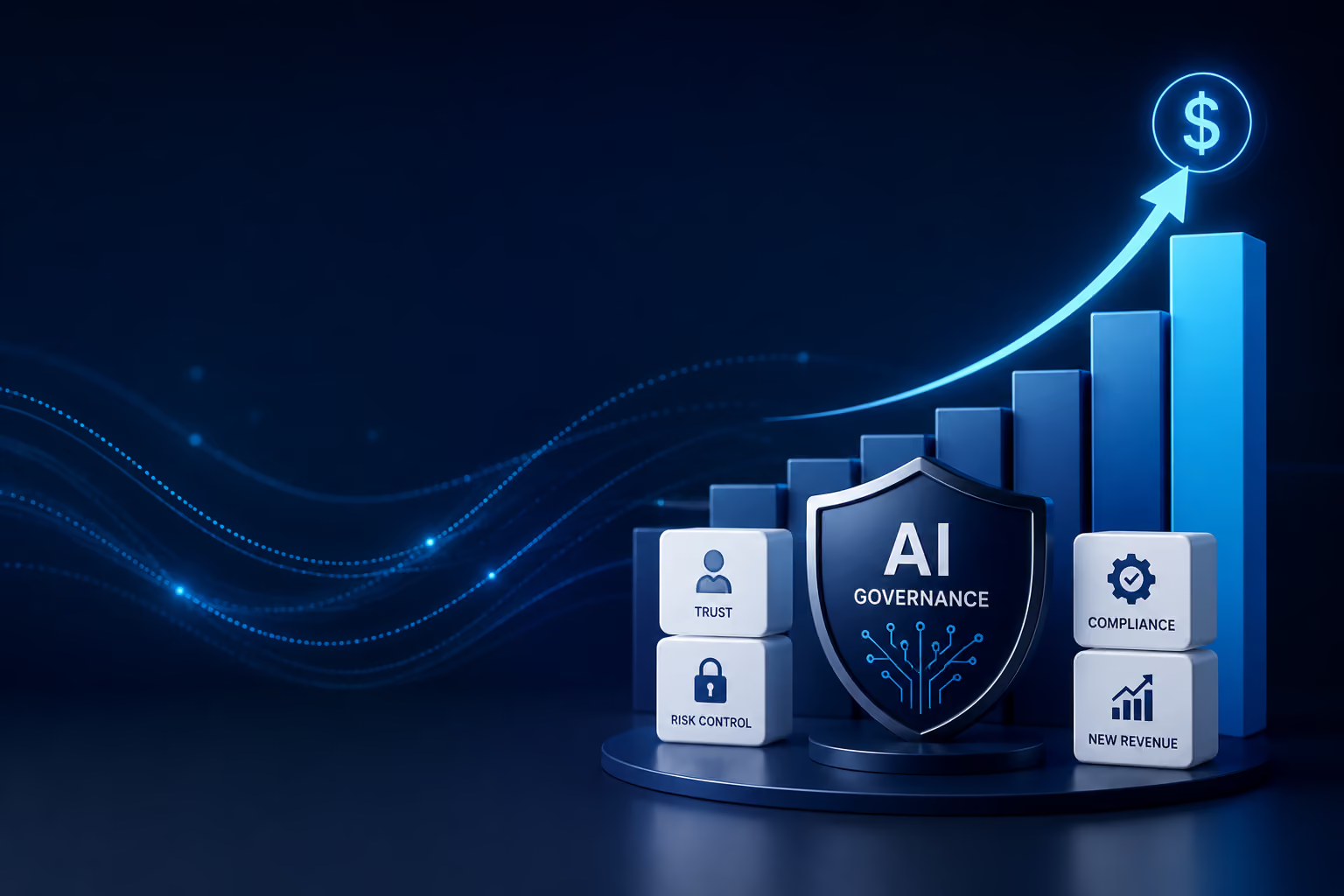

How Early-Adopter MSPs Are Creating New Revenue with AI Governance
Every major technology shift creates winners. The MSPs that embraced cloud services early built recurring revenue streams before competitors caught up. The MSPs that invested in cybersecurity early became trusted advisors rather than helpdesk providers.
Today, Artificial Intelligence is creating a similar opportunity. Across the industry, MSPs are beginning to recognize that AI governance is not simply a security challenge, it's a business opportunity. Customers are asking questions about AI. Leadership teams want visibility. Compliance teams want controls. Security teams want governance. And increasingly, MSPs are discovering that helping customers navigate these challenges can create entirely new service lines.
Why AI Governance Is Becoming a Customer Requirement
A year ago, most AI conversations focused on experimentation. Today, organizations are asking more practical questions: Which AI tools are employees using? Is company data being exposed? How do we create AI policies? What governance controls do we need? How do we monitor AI activity?
The conversation is shifting from AI adoption to AI management. That shift creates an opportunity for MSPs.
The New Revenue Categories Emerging Around AI
Forward-thinking MSPs are beginning to build offerings around four core areas: AI Risk Assessments (helping customers understand current AI exposure), AI Governance Programs (creating policies, controls, and frameworks), AI Detection & Response (monitoring AI activity and identifying risks), and Executive AI Advisory Services (providing strategic guidance through recurring engagements).
These services move MSPs higher in the customer relationship. Instead of managing technology, they begin helping manage business risk.
What Early-Adopter MSPs Are Seeing
Many MSPs initially assumed customers weren't interested in AI governance. What they discovered was the opposite. Customers may not know what "AI governance" means as a term, but they do understand data protection, risk management, compliance, and visibility. When AI governance is framed through those business outcomes, conversations become much easier, and many MSPs are uncovering new opportunities inside existing accounts.
Opportunity #1: Shadow AI Discovery
One of the fastest ways to demonstrate value is through visibility. Many customers believe AI adoption is limited. In reality, organizations often discover multiple AI applications in use, personal AI accounts, browser-based AI tools, and department-specific adoption they didn't know about. This creates an immediate opportunity for assessment and consulting engagements. (Related: How to Detect Shadow AI Across Your Organization — Internal Link → Blog 26)
Opportunity #2: AI Governance Consulting
Once visibility exists, customers typically ask "What should we do next?", which naturally leads into AI policies, governance frameworks, approval workflows, and risk management processes. For MSPs, these conversations are highly strategic and often involve executive stakeholders. (Related: The MSP Guide to Creating an AI Acceptable Use Policy — Internal Link → Blog 23)
Opportunity #3: AI Detection & Response
Many organizations quickly realize that visibility cannot be a one-time exercise. AI adoption changes constantly, new tools appear every week, new risks emerge every month. This is where recurring services begin. AI Detection & Response (AIDR) helps customers maintain visibility while creating recurring revenue opportunities for MSPs. (Related: AI Detection & Response vs MDR: What's the Difference? — Internal Link → Blog 25)
Opportunity #4: Executive Advisory Services
AI governance has become a leadership issue. Executives increasingly want answers to questions such as: How much AI is being used? What risks exist? Are policies working? Are we prepared for future regulations? These conversations create opportunities for vAISO services, governance reviews, executive reporting, and strategic advisory engagements.
(Related: Building a Virtual AI Security Officer (vAISO) Service)
What Makes AI Governance Different From Traditional Security Services
Cybersecurity services often focus on threats. AI governance focuses on behavior. The goal isn't necessarily stopping attacks, it's helping organizations use AI safely. That creates a different type of customer relationship: MSPs become advisors, educators, governance partners, and risk management consultants. This often leads to stronger customer retention and higher-value engagements.
Why Existing Customers Are the Best Opportunity
One mistake many MSPs make is treating AI governance as a net-new sales motion. In reality, the biggest opportunity often exists within the existing customer base. Most customers are already using AI, concerned about risk, and unsure how to govern adoption, creating natural expansion opportunities. A simple question like "Do you know which AI tools your employees are using today?" often opens the door to an entirely new conversation.
The MSPs Winning Today Are Starting Small
The most successful providers are not launching complex AI practices overnight. They're starting with a simple progression: AI Assessments → Governance Recommendations → Policy Development → Ongoing Monitoring → AI Detection & Response. This progression feels natural for customers and creates clear expansion paths.
The Future of AI Services
Over the next several years, AI governance is likely to become as common as security assessments, security awareness training, compliance reviews, and risk management programs. Organizations will increasingly expect guidance around AI policies, visibility, governance, compliance, and security. The MSPs building expertise today will be positioned to capture that demand tomorrow.
Lessons From Early Adopters
Several patterns are emerging among MSPs embracing AI governance: visibility creates opportunity (most customers don't know their current AI exposure), governance is easier to sell than security (executives often understand governance discussions more readily than technical security discussions), existing customers convert faster (trust already exists), recurring services follow assessments (discovery naturally leads to monitoring and governance), and AI is becoming a boardroom topic (the conversations are increasingly strategic).
Final Thoughts
Artificial Intelligence is creating one of the biggest service opportunities MSPs have seen in years. Customers need help navigating a rapidly changing landscape, they need visibility, governance, and trusted advisors. The MSPs that move early have an opportunity to establish themselves as leaders in a category that is still being defined.
Just as cybersecurity transformed managed services over the last decade, AI governance is poised to shape the next one.
.avif)
FAQs
Find answers to the most common questions about AI detection and response (AIDR), how it works, and why it matters for modern MSPs.

