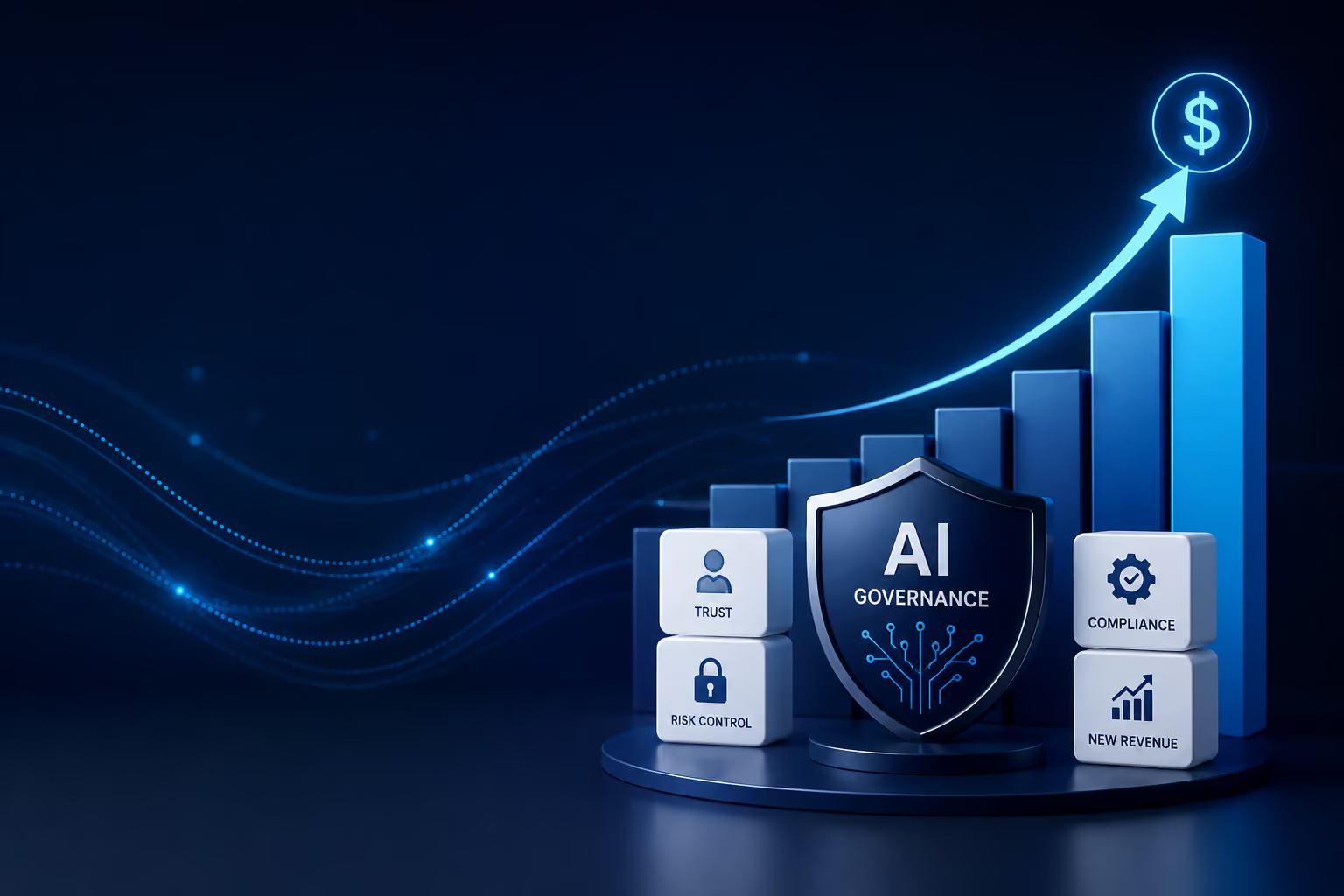
How MSPs Can Charge for AI Governance Services
One of the most common questions MSPs ask about AI is: "How do we make money from this?"
Many providers understand AI represents a major opportunity. They know customers are adopting ChatGPT, Copilot, Gemini, Claude, and dozens of AI-powered business applications. They understand customers need guidance around AI security, governance, compliance, and risk management. But many MSPs struggle with a practical challenge: how should these services be packaged and priced?
The good news is that MSPs don't need to invent an entirely new business model. AI governance services can be structured using the same assessment, consulting, and recurring service frameworks that successfully built cybersecurity and vCISO practices. The key is positioning AI governance as a business risk management service rather than a technology project.
Why Customers Are Willing to Pay for AI Governance
Most organizations are already using AI. What they lack is visibility. Business leaders increasingly ask: Which AI tools are employees using? Is sensitive data being exposed? Do we need AI policies? How do we comply with regulations? How do we govern AI safely?
These are executive-level concerns. When conversations move from technology to business risk, budgets become easier to justify, which is why AI governance often receives attention from CEOs, COOs, compliance leaders, security teams, and boards of directors. The challenge is no longer convincing customers that AI matters. The challenge is helping them manage it.
The Biggest Pricing Mistake MSPs Make
Many MSPs position AI governance as "AI consulting." That approach often creates pricing pressure, because customers perceive consulting as open-ended, difficult to measure, and hard to justify.
A better approach is to package AI governance into clearly defined outcomes, customers buy outcomes, not activities. Instead of selling "AI Consulting," sell AI Risk Assessment, Shadow AI Discovery, AI Governance Program, AI Detection & Response, and AI Compliance Readiness. These are easier to understand and easier to price.
A Three-Tier AI Governance Pricing Model
The most successful MSPs will likely structure AI services into three layers.
Tier 1: AI Discovery & Assessment This is the entry point, and the goal is visibility. Deliverables include an AI application inventory, Shadow AI assessment, governance gap analysis, risk scoring, and executive summary. Most customers don't know where AI is being used today — this service helps uncover that reality.
(Related: Shadow AI Assessment Checklist for SMBs )
One-time engagement.
Tier 2: AI Governance Implementation Once risks are identified, organizations need a framework. Deliverables include AI policy development (acceptable use policy, data handling guidelines, approval workflows), a governance framework (roles and responsibilities, escalation procedures, compliance alignment), and employee enablement (training sessions, awareness programs, best practices).
(Related: The MSP Guide to Creating an AI Acceptable Use Policy )
Project-based engagement.
Tier 3: Managed AI Governance This is where recurring revenue is created. Services may include AI usage monitoring, Shadow AI detection, governance reporting, quarterly reviews, executive dashboards, and AI Detection & Response. Think of this as the AI equivalent of managed security services.
(Related: What Is AI Detection & Response (AIDR)?)
Most MSPs will find recurring governance services become the most profitable offering over time.
Packaging AI Governance Like a vCISO Service
MSPs already understand the vCISO model. AI governance can be positioned similarly, instead of "Virtual Chief Information Security Officer," focus on "Virtual AI Governance Advisor" or "Virtual AI Security Officer (vAISO)." Responsibilities may include governance reviews, risk assessments, AI policy updates, compliance support, and executive reporting. This moves MSPs from tactical providers to strategic advisors.
Example Service Bundles
Package 1: AI Readiness Assessment — AI discovery, Shadow AI audit, risk report. Price range: $2,500–$10,000. Ideal for first-time engagements.
Package 2: AI Governance Program — Assessment, policy creation, governance framework, employee training. Price range: $7,500–$25,000. Ideal for SMBs and mid-market organizations.
Package 3: Managed AI Governance — Continuous monitoring, AI Detection & Response, governance reporting, quarterly reviews. Price range: $500–$5,000+/month. Ideal for recurring revenue.
How to Position AI Governance During Sales Conversations
Avoid leading with AI technology, tools, or features. Lead with business questions instead:
- Visibility — "Do you know which AI tools employees are using today?"
- Risk — "How would you know if sensitive information was being shared with AI platforms?"
- Compliance — "Do your current policies address AI usage?"
- Governance — "Who owns AI governance in your organization?"
These questions create executive-level conversations.
Why AI Governance Is Becoming a Boardroom Topic
Several forces are driving demand: rapid AI adoption (employees moving faster than governance programs), data protection concerns (organizations needing better visibility), compliance requirements (regulations continuing to evolve), and competitive pressure (organizations wanting AI benefits without excessive risk). As a result, AI governance is increasingly becoming a leadership priority, a trend likely to accelerate over the next several years.
Building Recurring Revenue Around AI
Many MSPs initially focus on assessments. The real opportunity comes from recurring services. A common progression looks like: AI Assessment → Governance Framework → Policy Creation → Managed AI Governance → AI Detection & Response.
This creates a natural expansion path. Organizations rarely stop after discovery, once risks are identified, they typically need ongoing support.
What Early-Adopter MSPs Are Seeing
Forward-thinking MSPs are beginning to realize that AI governance conversations resemble the early days of cybersecurity consulting. Customers know something important is happening. They know risk exists. They simply need guidance. Those who establish expertise now have an opportunity to become trusted advisors before the market becomes crowded.
Final Thoughts
AI governance isn't just another consulting service. It's quickly becoming a new category of managed services. Organizations need visibility into AI usage, governance frameworks, and policy guidance — and increasingly, they need continuous monitoring and AI Detection & Response.
For MSPs, the opportunity is significant. The providers that package and price AI governance effectively today will be the ones creating meaningful recurring revenue streams tomorrow.
.avif)
FAQs
Find answers to the most common questions about AI detection and response (AIDR), how it works, and why it matters for modern MSPs.