
For years, the managed services industry has followed a familiar pattern: a new challenge emerges, a new tool enters the stack, a new dashboard appears, a new alert stream needs monitoring. Individually, each solution makes sense. Collectively, they create something most MSP leaders know all too well: complexity.
Today, many MSPs operate dozens of tools across security, networking, endpoint management, compliance, backup, cloud infrastructure, identity, and monitoring. Every platform promises visibility. Every platform generates data. Every platform requires attention. The result is often dashboard fatigue, operational inefficiency, and rising costs.
Artificial intelligence is adding another layer of complexity. The question MSPs are increasingly asking is not whether they need visibility into AI — the answer is clearly yes. The more important question is: how do you gain AI visibility without adding even more operational burden? That challenge is becoming one of the defining issues for modern MSPs.
The hidden cost of tool sprawl
Most MSPs don't wake up one day and decide to build an overly complicated technology stack. Tool sprawl happens gradually, a security tool is added to solve a security problem, a monitoring platform addresses a visibility gap, a compliance solution helps satisfy customer requirements, an endpoint tool solves another operational challenge. Over time, complexity accumulates.
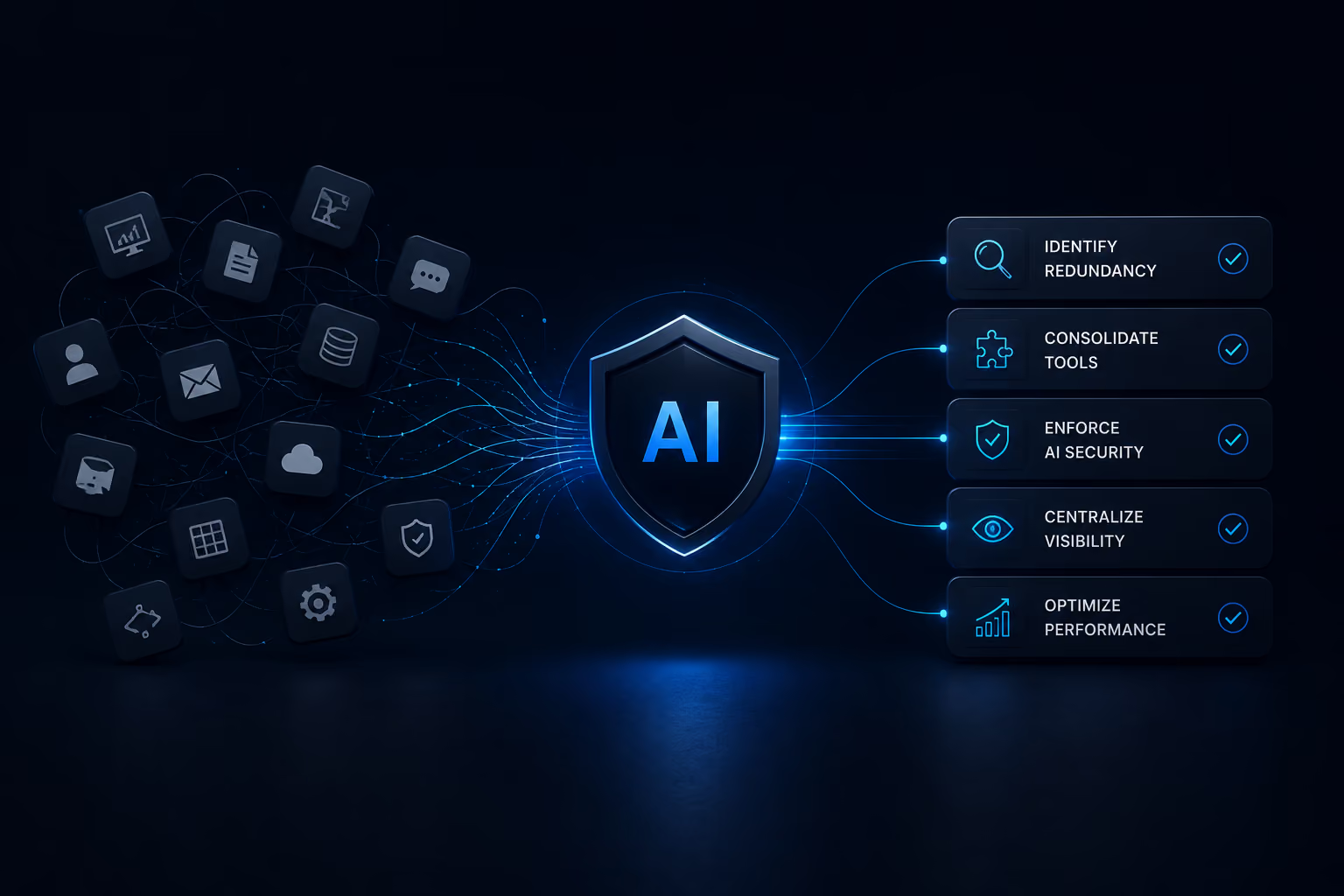
The consequences extend far beyond licensing costs. Tool sprawl often creates alert fatigue, data silos, duplicate functionality, longer troubleshooting cycles, higher training requirements, and increased operational overhead. Many MSPs eventually find themselves spending as much time managing tools as they do solving customer problems. This is where AI is beginning to reshape the conversation.
AI is creating new operational challenges
AI adoption is happening across nearly every customer environment. Employees use generative AI tools, developers rely on AI coding assistants, and business applications increasingly include embedded AI capabilities. Organizations want to move faster and improve productivity, but every new AI capability introduces new questions: which AI tools are being used, what information is being shared, are governance policies being followed, where are the risks, and how do we monitor AI activity?
Historically, the answer might have been "add another tool." But many MSPs have reached a practical limit. They need more visibility without more complexity.
A lesson from a high-growth MSP
5K Technical Services operates with a philosophy that many MSP leaders will recognize: technology should serve business outcomes, not the other way around. As the organization evaluated the growing impact of AI on customer environments, it identified a need for deeper visibility into AI usage, user behavior, browser activity, security risks, and operational intelligence, while wanting to avoid introducing additional complexity into an already mature technology stack.
That challenge mirrors what many MSPs are experiencing today. AI is creating new governance and security requirements, but customers and providers alike are becoming increasingly resistant to adding another disconnected platform to manage. The future is not more dashboards. The future is better visibility.
Why AI security cannot become another silo
One of the biggest mistakes the industry could make is treating AI security as a completely separate discipline. The reality is that AI touches almost every area of IT operations — security, compliance, data governance, user behavior, risk management, and business operations. Creating yet another disconnected platform often introduces new operational burdens rather than solving existing ones.
Forward-thinking MSPs are beginning to look for ways to integrate AI visibility into broader operational workflows. The goal is not more alerts, it's better decisions. The goal is understanding how AI is being used, where risk exists, and what actions should be taken.
The rise of AI detection and response
Traditional cybersecurity evolved because organizations needed better ways to detect and respond to threats. The same evolution is beginning to occur in AI. Organizations increasingly need visibility into which AI tools are active (AI Usage), what activities create exposure (AI Risk), whether policies are being followed (AI Governance), how users are interacting with AI (AI Behavior), and whether AI-specific attacks or misuse are occurring (AI Threats).
This is where AI Detection and Response (AIDR) begins to emerge as a new category. Just as Managed Detection and Response (MDR) helps organizations identify and respond to cyber threats, AIDR helps organizations identify and respond to AI-related risks. As AI adoption accelerates, this capability is becoming increasingly important for MSPs looking to deliver next-generation security services.
Why operational efficiency matters more than ever
Most MSPs face the same reality: customers expect more, threats continue to evolve, margins remain under pressure, and hiring experienced engineers becomes increasingly difficult. The answer cannot always be "add more people."
Successful MSPs are increasingly focused on helping technology make teams more effective — reducing repetitive work, improving visibility, simplifying investigations, consolidating operational workflows, and automating routine analysis. The future belongs to MSPs that can scale expertise without proportionally scaling headcount. This is one reason AI visibility and operational efficiency are becoming closely connected conversations. The objective is not simply to monitor AI, it's to create actionable intelligence without overwhelming engineering teams.
Why MSPs are looking beyond traditional security
Traditional security platforms remain essential, organizations still need endpoint protection, email security, identity security, MDR, and vulnerability management. However, AI introduces risks that many traditional platforms were never designed to monitor, including Shadow AI, AI data leakage, prompt injection risks, AI policy violations, unauthorized AI usage, and AI-assisted fraud.
MSPs increasingly need visibility into these areas as part of their broader security strategy. The challenge is not replacing existing security tools it's extending visibility into areas those tools were never designed to cover.
The business opportunity hidden inside AI operations
Many MSPs initially view AI as another technology trend to manage. The more strategic perspective is that AI creates an opportunity to expand advisory services. Customers increasingly need help with AI governance, security, policy development, risk management, and visibility.
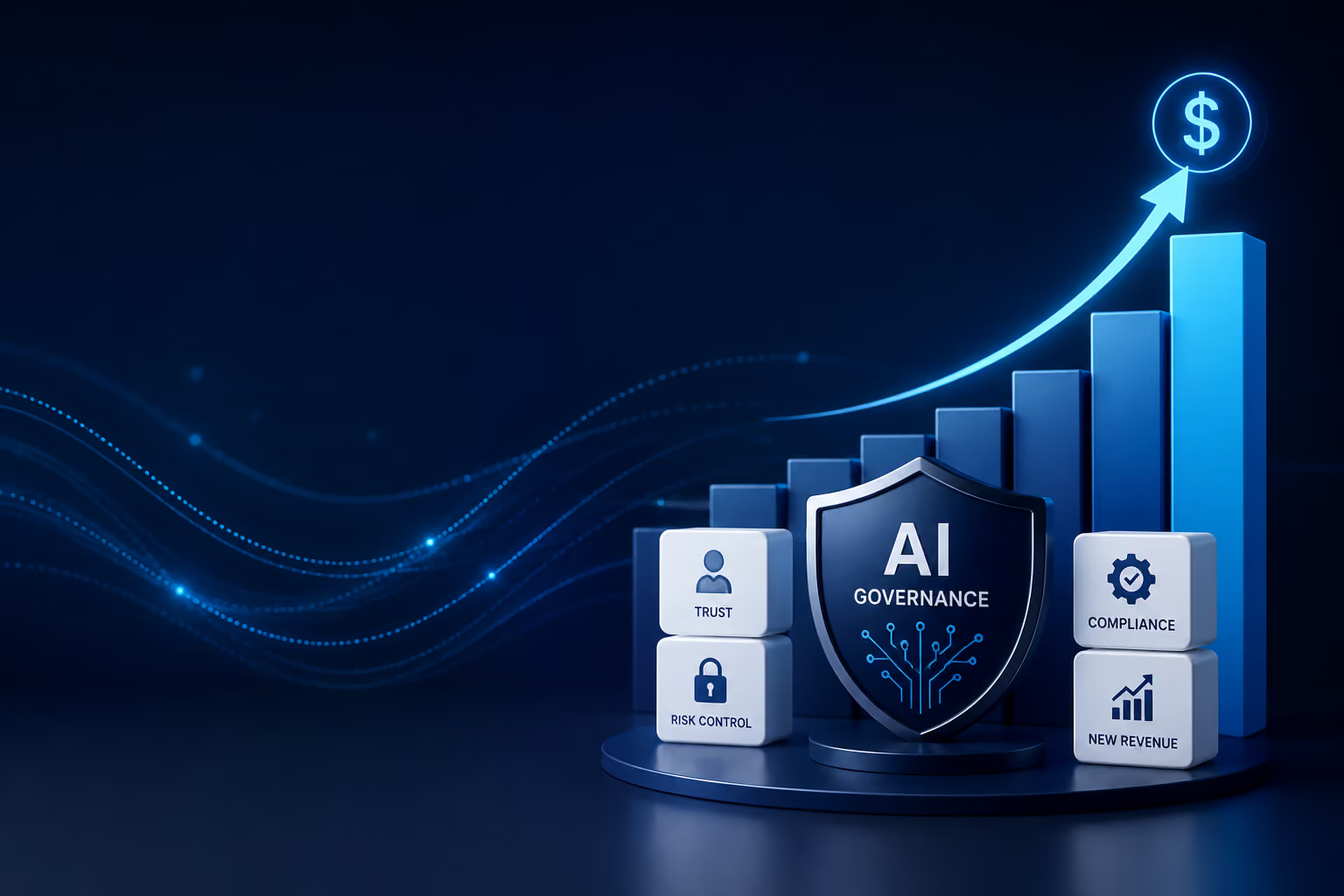
The providers that can simplify these conversations while reducing operational complexity will have a significant advantage. AI security is not simply about reducing risk — it's about creating new value. As organizations continue adopting AI, MSPs that can provide both visibility and guidance will become increasingly important partners.
.avif)
Conclusion
The MSP industry has always adapted to change. Cloud computing created new opportunities. Cybersecurity created new services. Compliance created new advisory models. Artificial intelligence is creating the next evolution.
The challenge is not simply managing AI. The challenge is doing so without adding unnecessary complexity. The MSPs that succeed will not be the ones with the most dashboards, they'll be the ones with the clearest visibility, the most efficient operations, and the strongest ability to help customers adopt AI responsibly. As AI continues to reshape customer environments, operational simplicity may become one of the most valuable competitive advantages an MSP can have.
FAQs
Find answers to the most common questions about AI detection and response (AIDR), how it works, and why it matters for modern MSPs.