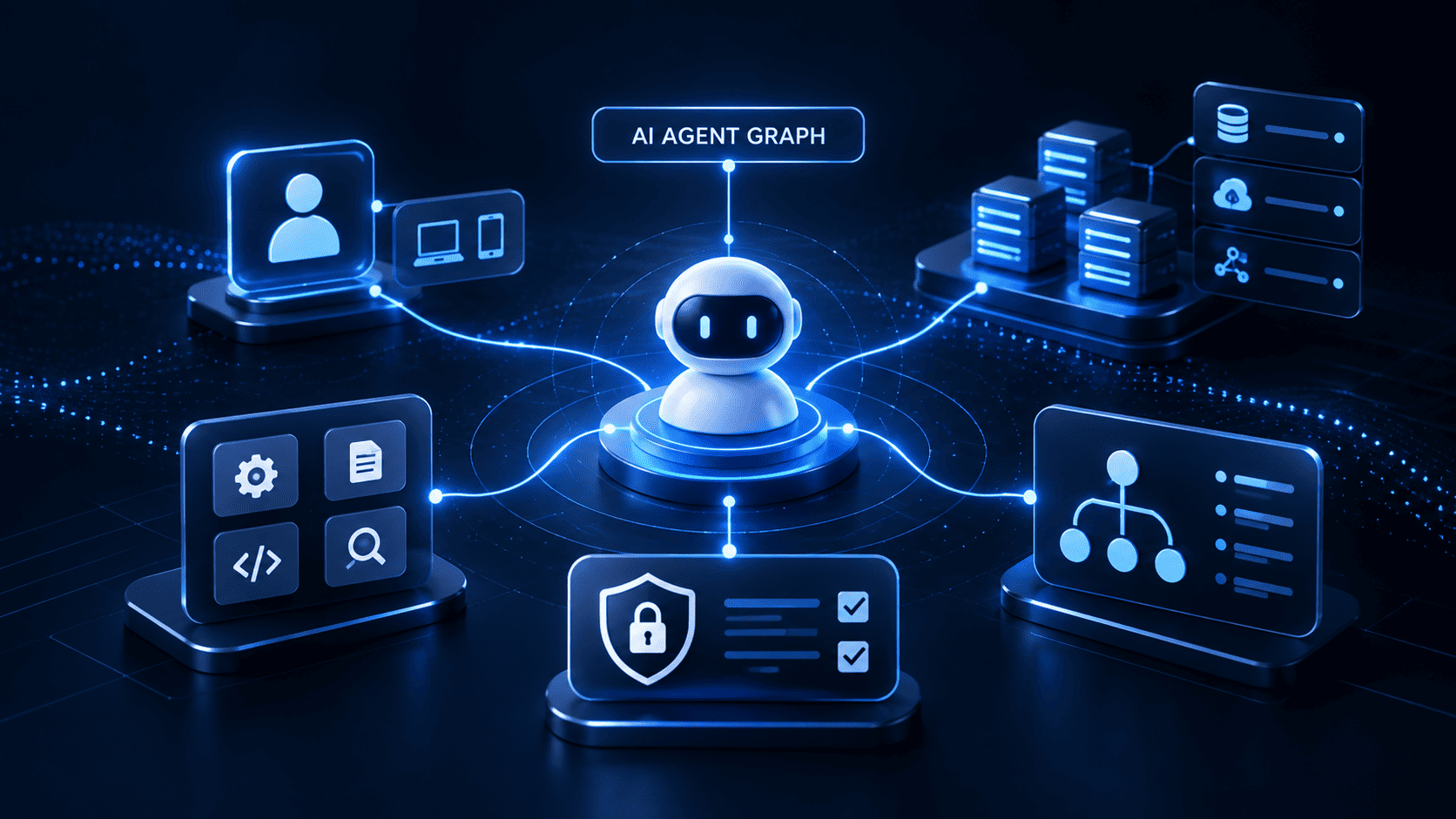

Artificial Intelligence is quickly becoming part of everyday business operations. Employees use ChatGPT to draft emails. Developers use AI coding assistants to write software. Marketing teams use AI to create content. Customer support teams rely on AI-powered tools to answer questions faster.
While these technologies improve productivity, they also introduce an entirely new category of security and governance challenges. Many organizations have little visibility into which AI tools employees are using, what data is being shared with AI systems, whether AI policies are being followed, how AI impacts compliance requirements, and where potential risks are emerging.
This growing visibility gap has led to the rise of a new security discipline: AI Detection and Response (AIDR).
Much of this visibility challenge stems from the growing prevalence of Shadow AI, where employees adopt AI tools without IT oversight. Organizations cannot secure what they cannot see, making visibility the first step toward effective AI governance. (Related: "The Rise of Shadow AI: Why MSPs Need Guardrails Before AI Becomes a Security Problem")
Just as Endpoint Detection and Response (EDR) transformed endpoint security and Managed Detection and Response (MDR) transformed threat monitoring, AI Detection and Response is emerging as a critical capability for organizations embracing AI. For MSPs, AIDR represents both a security necessity and a significant business opportunity.
What is AI detection and response (AIDR)?
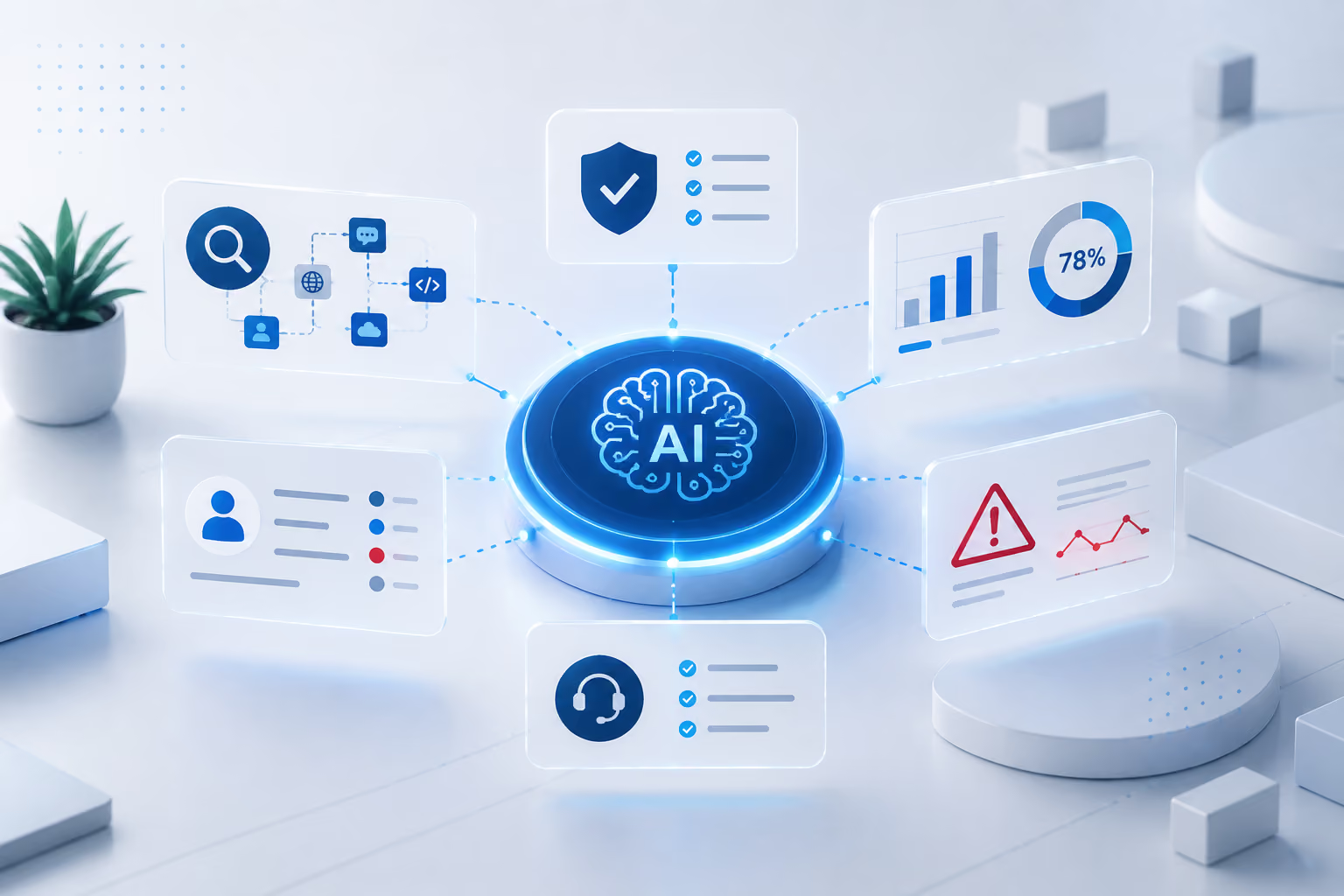
AI Detection and Response (AIDR) is the process of continuously monitoring, identifying, analyzing, and responding to AI-related activities, risks, and policy violations across an organization's environment. AIDR provides visibility into AI applications being used, user interactions with AI systems, data being shared with AI platforms, Shadow AI activity, AI-related security risks, and AI governance compliance.
The goal is simple: help organizations adopt AI safely without sacrificing visibility, security, or control.
Why traditional security tools cannot solve the AI problem
Most businesses already have security tools, antivirus solutions, endpoint protection, firewalls, DNS filtering, email security, identity management, MDR services. Yet many organizations still struggle to answer basic AI-related questions: Are employees using personal ChatGPT accounts? Which AI tools are approved versus unapproved? Is sensitive information being shared externally? Which departments have the highest AI adoption? Are AI governance policies being followed?
Traditional security tools were designed to protect devices, networks, and identities. They were not designed to provide comprehensive visibility into AI usage. This creates a new security blind spot.
The rise of shadow AI
One of the biggest drivers behind AIDR is Shadow AI, when employees use AI tools without organizational oversight or approval. Examples include personal ChatGPT accounts used for work, unapproved AI writing assistants, AI image-generation tools, AI-powered coding platforms, and browser-based AI extensions.
In many organizations, AI adoption is happening faster than governance. Employees often adopt AI because it improves productivity. The problem is not that people are using AI — the problem is that organizations frequently don't know where, how, or why it's being used. Without visibility, organizations cannot effectively manage risk.
Many organizations initially attempt to solve this challenge by blocking AI applications entirely. Unfortunately, this approach often pushes AI usage underground, creating even larger visibility gaps and increasing organizational risk. (Related: "Why Blocking AI Is a Losing Strategy for MSPs")
The four core pillars of AI detection and response
Effective AIDR solutions typically focus on four key areas.
1. AI Discovery The first step is identifying AI usage across the environment, which applications are being accessed, who is using them, how frequently, and which departments are adopting AI fastest. Discovery creates the foundation for governance. You cannot secure what you cannot see.
2. Risk Detection Not all AI activity presents equal risk. Organizations need to identify unauthorized AI applications, sensitive data exposure, risky user behavior, policy violations, and potential compliance concerns. Risk detection helps security teams prioritize action.
3. Governance Enforcement Visibility alone is not enough. Organizations must be able to establish and enforce AI policies — approved AI application lists, data-sharing restrictions, department-specific usage policies, and industry-specific compliance controls. Governance transforms visibility into operational control.
4. Response and Remediation When risky behavior is detected, organizations need mechanisms to respond: automated alerts, policy enforcement actions, user education workflows, incident investigations, and remediation recommendations. Response capabilities help organizations reduce risk before it becomes a larger problem.
Common AI risks AIDR helps address
Sensitive Data Leakage — Employees may unintentionally upload customer information, financial records, internal reports, legal documents, and intellectual property. AIDR helps identify these risks before they become security incidents.
Unapproved AI Usage — Many organizations discover dozens of AI tools being used without approval. AIDR provides visibility into these applications and helps enforce governance policies.
Compliance Challenges — Industries such as healthcare, finance, legal services, and insurance face increasing pressure to demonstrate responsible AI usage. AIDR helps organizations maintain visibility and accountability.
AI Policy Violations — Organizations can monitor adherence to internal AI governance frameworks and identify areas requiring additional training or enforcement.
How AIDR differs from MDR
Many MSPs are already familiar with Managed Detection and Response. While MDR and AIDR share similar principles, they address different challenges:
Think of AIDR as a complementary layer to existing security services. As AI adoption grows, organizations need both.
Why AIDR matters for MSPs
MSPs are uniquely positioned to help customers navigate AI adoption. Most SMBs lack AI governance expertise, dedicated AI security teams, AI risk assessment capabilities, and AI monitoring tools — so they increasingly turn to trusted technology advisors for guidance.
This creates opportunities for MSPs to deliver new services:
- AI Risk Assessments — Helping customers understand current AI exposure.
- AI Governance Services — Creating policies and acceptable-use frameworks.
- AI Monitoring Services — Providing ongoing visibility into AI activity.
- AI Compliance Services — Supporting audit and regulatory requirements.
- AI Detection and Response — Delivering continuous AI security monitoring and enforcement.
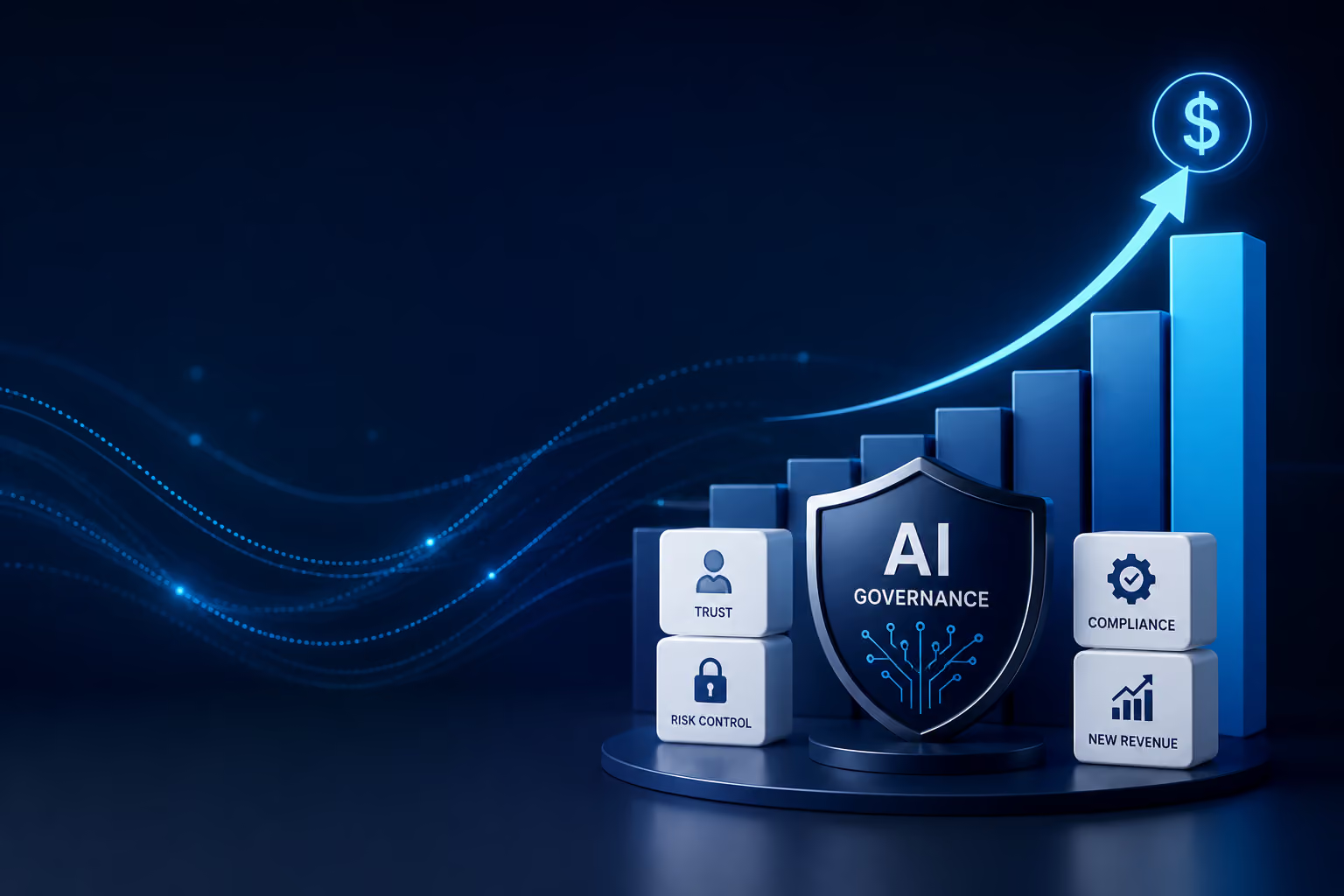
These services strengthen customer relationships while creating recurring revenue opportunities. In fact, many forward-thinking MSPs are already positioning AI Detection and Response as the next evolution of managed security services, creating entirely new revenue streams while helping customers embrace AI safely. (Related: "AI Detection and Response: Why Unmanaged AI Risk Is the Next Revenue Opportunity for MSPs")
What organizations should look for in an AIDR solution
When evaluating AIDR platforms, organizations should prioritize solutions that provide:
- Comprehensive AI Visibility — Visibility across browsers, endpoints, networks, and AI applications.
- Real-Time Monitoring — Immediate awareness of AI activity and emerging risks.
- Policy Enforcement — The ability to establish and enforce governance controls.
- Automated Response — Mechanisms to quickly address policy violations and risky behavior.
- Executive Reporting — Clear insights that help leadership understand AI adoption and risk exposure.
The most effective AIDR solutions combine visibility, governance, and response into a unified platform.
The future of AI security
AI adoption is still in its early stages. Business leaders increasingly recognize that AI represents one of the biggest opportunities of our time. However, success will depend on balancing innovation with governance, security, and risk management. Organizations that embrace AI responsibly will gain a significant competitive advantage. (Related: "AI Is the Greatest Opportunity of Our Time—And One of the Biggest Risks We Can't Ignore")
Over the next few years, organizations will increasingly require solutions that help them govern AI usage, protect sensitive information, demonstrate compliance, reduce organizational risk, and enable responsible innovation. Just as endpoint security became a standard requirement, AI Detection and Response is likely to become a foundational element of modern security programs. Organizations that establish visibility today will be better prepared for tomorrow's challenges.
Final thoughts
AI is creating enormous opportunities for businesses. It's also introducing new security, governance, and compliance challenges that traditional tools were never designed to address.
AI Detection and Response helps organizations understand how AI is being used, identify emerging risks, enforce governance policies, and respond to potential issues before they become significant problems. For MSPs, AIDR represents more than a security capability, it represents the next evolution of managed services in an AI-driven world.
The question is no longer whether customers are using AI. The question is whether they have the visibility and controls necessary to use it safely.
FAQs
Find answers to the most common questions about AI detection and response (AIDR), how it works, and why it matters for modern MSPs.