
Over the last decade, cybersecurity teams have become familiar with a growing list of acronyms. First came EDR (Endpoint Detection and Response). Then XDR (Extended Detection and Response). Then MDR (Managed Detection and Response). Each emerged because security teams needed better ways to identify, investigate, and respond to evolving threats.
Artificial intelligence is creating a similar challenge. Organizations are adopting AI faster than governance frameworks can keep pace. Employees are experimenting with generative AI tools, developers are integrating AI assistants into workflows, and business applications are embedding AI capabilities into everyday operations. The result is a new category of risk that many traditional security tools were never designed to monitor.
This is where AI Detection and Response (AIDR) begins to emerge. While still an evolving category, AIDR represents a new approach to understanding, monitoring, and managing AI-related risks across the organization — and it's the category Kipling Secure was built to define, as the industry's first AIDR platform purpose-built for MSPs.
Why AI requires a different security approach
Most cybersecurity programs were built to detect threats targeting systems, malware, ransomware, phishing, unauthorized access, network attacks, and vulnerability exploitation. These threats remain important. The challenge is that many AI-related risks don't look like traditional security incidents.
Consider a few examples: an employee uploads confidential information into an AI tool, a developer shares proprietary code with an AI assistant, an unauthorized AI application is being used across multiple departments, or users interact with AI systems in ways that violate organizational policy. None of these activities necessarily trigger traditional security alerts, yet they may introduce significant business risk. This is one reason organizations are realizing that AI requires new forms of visibility.
Related Reading: → Why Traditional Cybersecurity Tools Can't Protect Against AI Threats
What is AI detection and response?
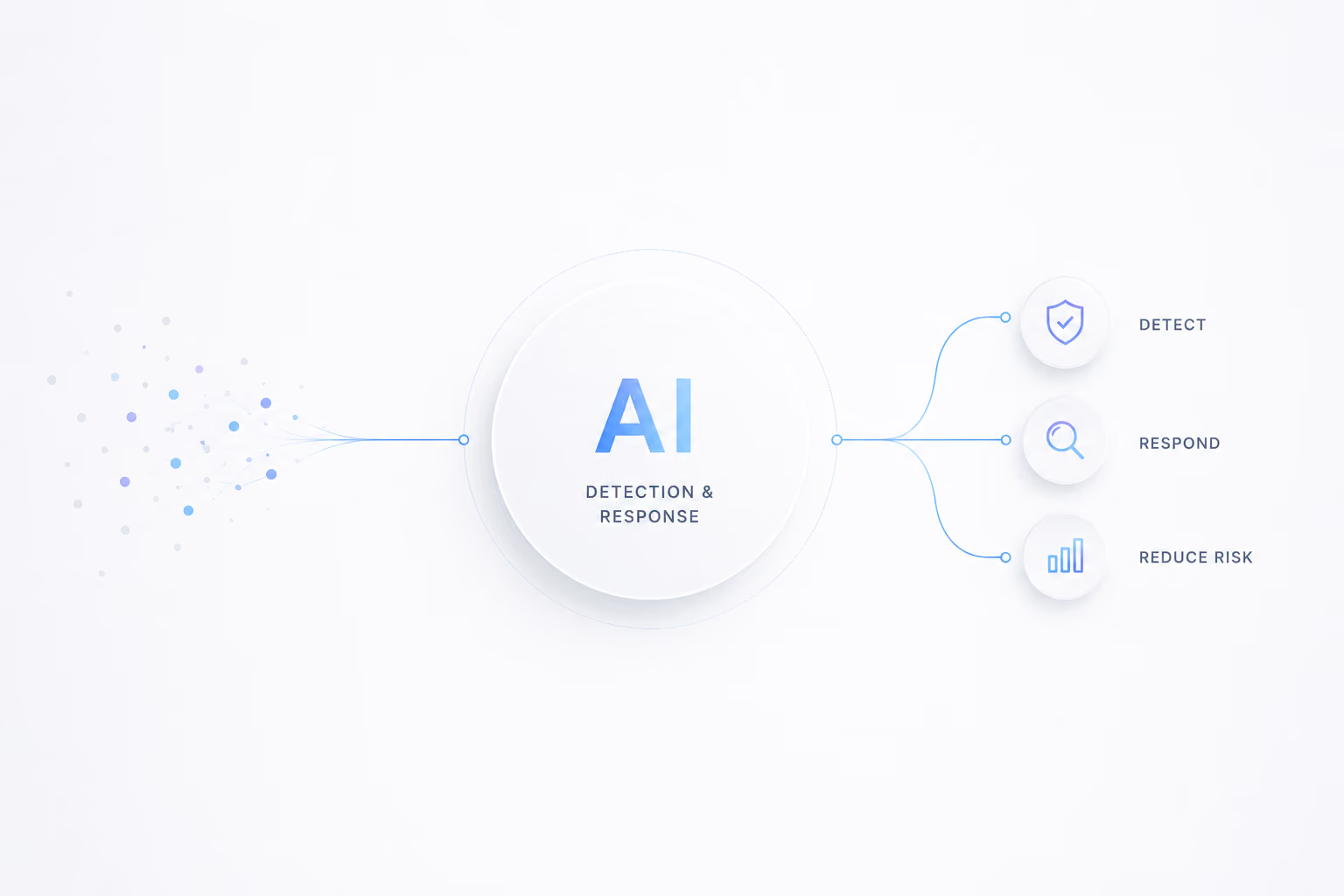
AI Detection and Response (AIDR) is the practice of identifying, monitoring, analyzing, and responding to AI-related risks across an organization. Unlike traditional cybersecurity solutions that focus primarily on systems and infrastructure, AIDR focuses on AI activity, AI usage, and AI-related behavior. The goal is not simply to identify threats — it's to understand how AI is being used and where risk may exist.
A mature AIDR capability typically helps organizations answer questions such as: Which AI tools are employees using? How frequently are they being accessed? Is sensitive information being shared? Are AI governance policies being followed? Is Shadow AI present? Are AI-related risks increasing over time? These insights create the foundation for effective AI governance.
Why visibility is the first step
One of the most common mistakes organizations make is attempting to govern AI before they understand where AI is being used, creating policies based on assumptions rather than evidence. AIDR begins with visibility: understanding which AI applications exist, which users interact with them, what usage patterns look like, and where potential risks exist.
Many organizations are surprised by what they discover. AI adoption often extends far beyond approved platforms, employees experiment independently, departments adopt tools without formal review, and applications introduce embedded AI features automatically. Without visibility, governance becomes difficult. You cannot manage what you cannot see.
Related Reading: → Shadow AI: The Hidden Threat Already Inside Your Organization
How AIDR differs from traditional security monitoring
Traditional security monitoring focuses on indicators of compromise, suspicious logins, malware activity, network anomalies, exploit attempts. AIDR focuses on different signals:
- AI Usage Activity — Understanding how AI tools are being used.
- AI Risk Indicators — Identifying potentially risky interactions.
- Sensitive Data Exposure — Detecting information that may create governance concerns.
- Shadow AI — Discovering unauthorized or unmanaged AI usage.
- Policy Violations — Identifying activity that conflicts with organizational guidelines.
The difference is subtle but important. Traditional security asks: "Is someone attacking us?" AIDR often asks: "Are we using AI in a way that creates unnecessary risk?" Both questions matter.
The relationship between AIDR and AI governance
Many organizations think of governance as policies and procedures. In reality, governance depends heavily on visibility, a policy is only useful if organizations can determine whether it's being followed. This is why AIDR and AI governance are closely connected: governance defines expectations, and AIDR provides visibility into reality.
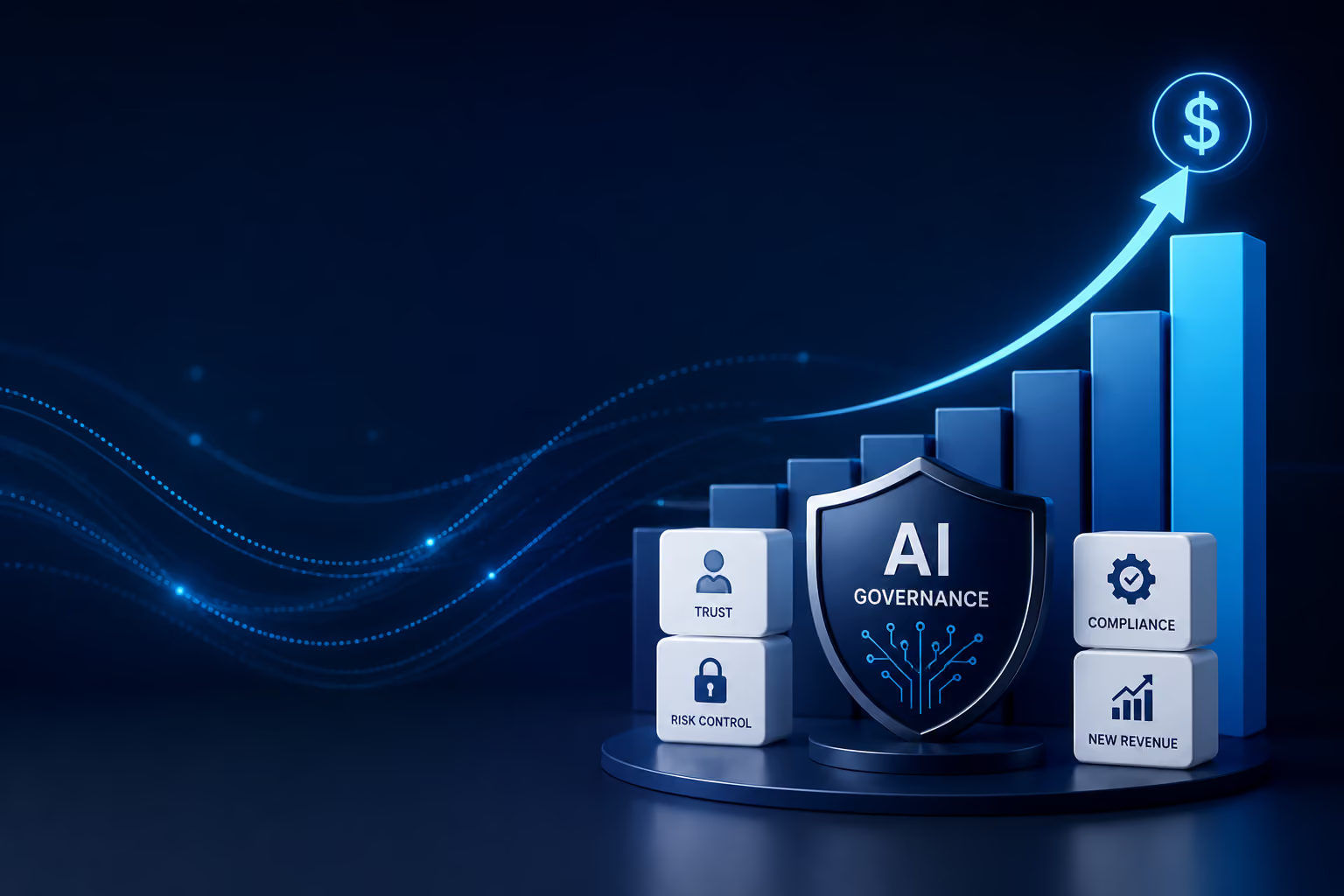
Together they help organizations reduce risk, improve accountability, protect sensitive information, support compliance initiatives, and encourage responsible AI adoption. Without visibility, governance becomes guesswork. Without governance, visibility lacks context. The two work best together.
Related Reading: → What Responsible AI Use Looks Like in a Modern Business
What AI detection and response looks like in practice
Although implementations vary, most organizations focus on several key areas: AI Discovery (identifying AI applications and services in use across the environment), AI Visibility (understanding how users interact with AI systems), Risk Identification (highlighting potentially risky AI activity), Governance Monitoring (assessing adherence to organizational policies), and Incident Investigation (providing context when AI-related events occur).
The objective is not to eliminate AI usage. The objective is to ensure AI can be adopted safely and responsibly. At Kipling Secure, this is delivered through an AI Visibility Assessment that produces a clear AI Exposure Score, followed by Guardrails for organizations ready to move from visibility into active policy enforcement.
Why AIDR matters to MSPs
MSPs are increasingly being asked to help customers manage AI adoption. Customers want answers to questions such as: How do we identify Shadow AI? What AI tools are employees using? How do we monitor AI activity? How do we enforce AI policies? How do we reduce AI-related risk?
Historically, MSPs have provided guidance around cybersecurity, compliance, and technology management. AI governance represents the next evolution of that advisory role. AIDR helps MSPs deliver value by providing AI visibility, risk assessments, governance support, ongoing monitoring, and customer reporting, capabilities likely to become increasingly important components of managed security services as AI adoption accelerates.
Related Reading: → AI Security for MSPs: The Next Evolution of Managed Security Services
Why AI detection and response will continue to grow
The future of AI security will not be defined solely by preventing attacks, it will be defined by understanding AI activity. Organizations need visibility into AI usage, behavior, governance, risk, and compliance. The faster AI adoption grows, the more important this visibility becomes.
Just as EDR became essential for endpoint security and MDR became essential for modern threat monitoring, AIDR is likely to play an increasingly important role in helping organizations manage AI-related risk. The category is still evolving. The need for visibility is not.
.avif)
Conclusion
AI adoption is creating enormous opportunities for organizations. It's also creating new governance and security challenges. Traditional security tools remain essential, but many were never designed to understand how AI is being used across an organization.
This is why AI Detection and Response is emerging as an important capability. AIDR helps organizations move beyond assumptions and gain the visibility required to govern AI effectively. As AI becomes increasingly embedded in business operations, visibility will become one of the most valuable assets an organization can have.
.avif)
FAQs
Find answers to the most common questions about AI detection and response (AIDR), how it works, and why it matters for modern MSPs.