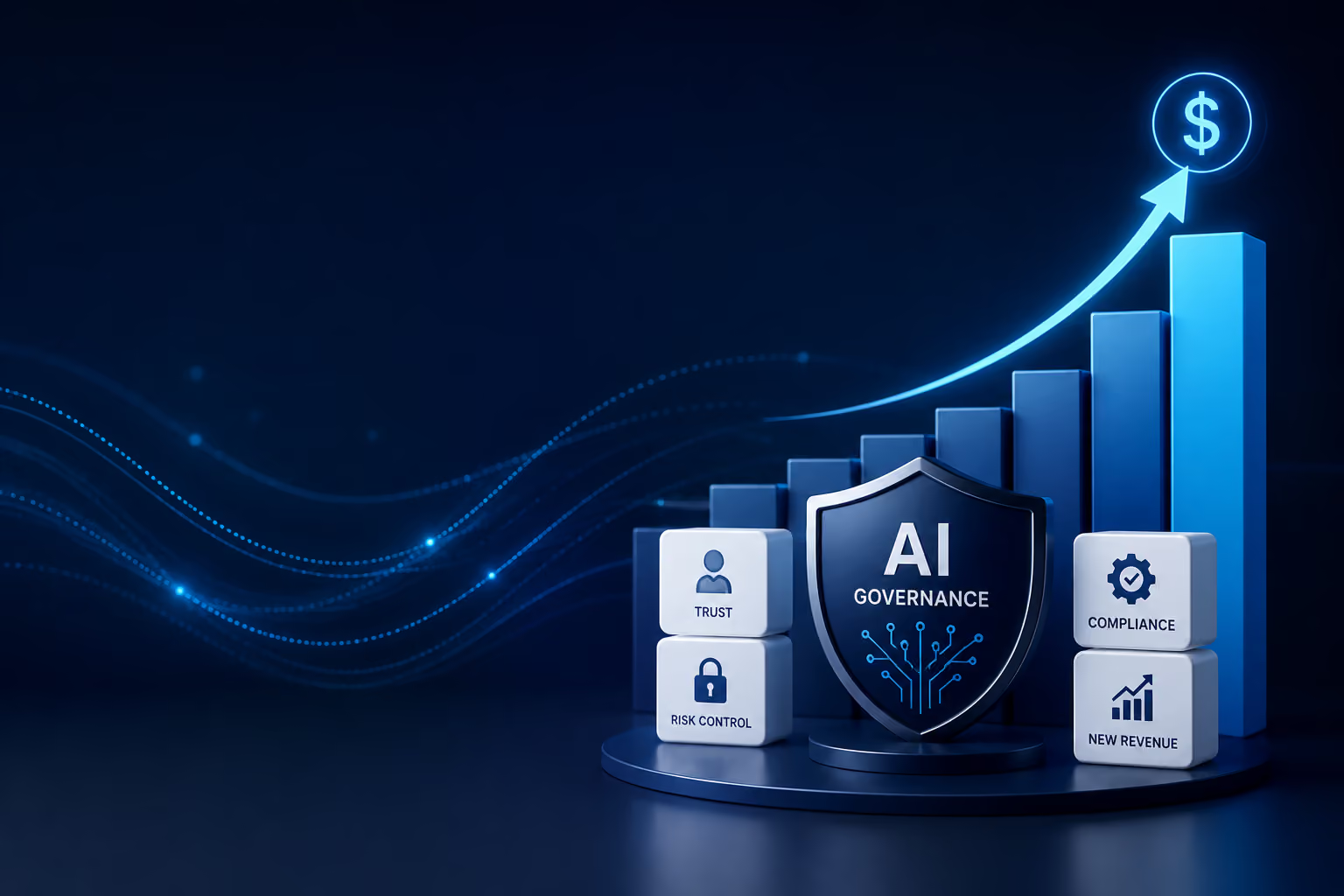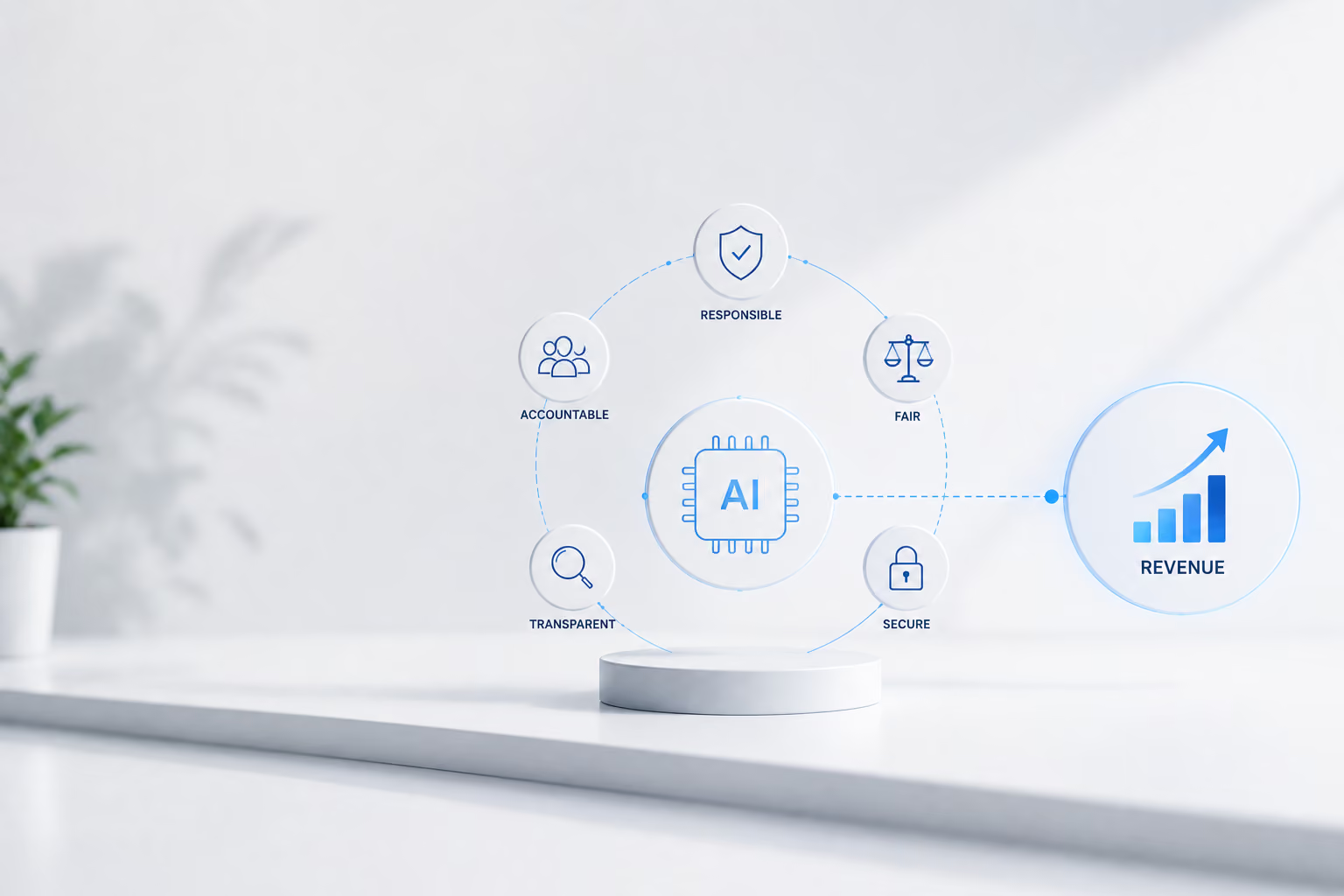

Every major technology shift creates winners and losers. The winners are rarely the organizations that simply react to change, they're the ones that recognize new customer needs early and build services around them.
Over the past two decades, MSPs have successfully adapted to multiple technology transitions. They helped customers move to the cloud, built cybersecurity practices, developed compliance services, and expanded into advisory and vCISO offerings. Artificial intelligence is creating the next major opportunity. The question is not whether customers will adopt AI, they already are. The question is whether MSPs will position themselves as trusted advisors in that journey.
For many providers, AI governance may become one of the most important service opportunities of the next several years.
AI adoption is happening with or without a plan
One of the biggest misconceptions surrounding AI is that organizations are carefully planning adoption strategies before deploying new tools. In reality, most AI adoption begins at the user level, employees discover tools, departments experiment independently, applications introduce AI features automatically, and developers begin using AI assistants. Before leadership realizes what's happening, AI is already embedded in daily operations.
This creates a familiar challenge: technology adoption accelerates, governance lags behind, and risk increases. Organizations suddenly find themselves asking questions they're not equipped to answer, which AI tools are employees using, what information is being shared, are compliance requirements being met, how do we create AI policies, what risks should we monitor. Many SMBs lack the internal expertise required to answer these questions. That creates an opportunity for MSPs.
Why AI governance is becoming a business requirement
AI governance is often misunderstood as a compliance exercise. In reality, it's becoming a business requirement. Organizations need confidence that AI is being used responsibly, visibility into AI activity, policies that balance innovation with risk management, and guidance around security, compliance, and acceptable use.
The challenge is that most SMBs don't have dedicated AI governance teams. Many don't have internal security leadership, and others have limited resources available to assess emerging technologies. This creates a natural advisory role for MSPs, the same customers who rely on MSPs for cybersecurity, compliance, and technology planning are increasingly looking for guidance around AI.
Related Reading: → Why Blocking AI Doesn't Work: A Better Approach to AI Governance
The shift from technology provider to trusted advisor
Historically, many MSP services focused on technology management, endpoint management, infrastructure support, cloud administration, security monitoring, help desk services. These services remain important. However, AI is creating demand for higher-value advisory conversations. Customers are no longer just asking "Can you manage this device?", they're asking "Can you help us adopt AI safely?"
That's a fundamentally different discussion, one involving risk management, governance, security strategy, compliance, business processes, and user education. These conversations position MSPs closer to executive leadership and decision-makers. As a result, AI governance can become a strategic service rather than simply another technical offering.
Five AI governance services MmSPs can offer today
The good news is that MSPs do not need to reinvent their businesses to participate in the AI opportunity. Many already possess the skills required to deliver valuable AI-related services.
1. AI Readiness Assessments Many organizations don't know where to begin with AI. An AI readiness assessment helps customers understand current AI usage, existing risks, governance gaps, policy requirements, and security considerations — creating an excellent entry point for advisory engagements.
2. Shadow AI Discovery One of the first questions customers ask is "How much AI are our employees already using?" The answer is often surprising. Shadow AI is becoming one of the most common governance challenges organizations face, and helping customers identify AI usage patterns creates immediate value and often uncovers additional service opportunities.
Related Reading: → Shadow AI: The Hidden Threat Already Inside Your Organization
3. AI Policy Development Most organizations understand they need AI policies. Few know where to start. MSPs can assist with acceptable use policies, data handling guidelines, governance frameworks, compliance requirements, and employee education. Strong policies help organizations establish expectations before risks become incidents.
4. AI Risk Assessments AI introduces new categories of risk that many businesses have never evaluated — data exposure, compliance concerns, Shadow AI, AI-specific threats, and third-party AI dependencies. Helping customers assess these risks positions MSPs as strategic advisors.
Related Reading: → Four AI Risks Every SMB Should Understand Before Deploying AI
5. Ongoing AI Governance Monitoring AI adoption is not a one-time event — it's an ongoing process. New tools emerge constantly, employee behavior changes, and applications introduce new AI features. This creates an opportunity for recurring services focused on AI visibility, governance reviews, policy enforcement, risk monitoring, and compliance reporting — services that align naturally with the managed services business model.
Why AI governance creates recurring revenue
One reason cybersecurity became such a successful MSP category is that security requires ongoing attention. AI governance follows a similar pattern. Organizations do not solve AI governance once and move on, they continuously face new challenges involving emerging AI tools, new business use cases, regulatory changes, security threats, and data governance requirements.
As a result, customers increasingly need ongoing guidance rather than one-time projects, which makes AI governance particularly attractive from a recurring revenue perspective. The organizations that establish these services early will likely have a significant advantage as demand grows.
The future of managed AI security
The line between cybersecurity and AI governance is already beginning to blur. Organizations want answers to questions such as how to identify Shadow AI, how to reduce AI-related risks, how to monitor AI activity, how to enforce governance policies, and how to protect sensitive information. These questions increasingly fall within the broader category of managed AI security.
Just as managed security services became a natural extension of traditional IT support, AI governance and AI risk management are becoming natural extensions of managed cybersecurity. Forward-thinking MSPs are already recognizing this shift.
Why this matters right now
Many technology transitions take years to unfold. AI adoption is moving much faster. Customers are already experimenting with AI, employees are already using AI tools, and business applications are already embedding AI capabilities. The demand for guidance already exists.
MSPs that wait for perfect clarity may find themselves responding to demand rather than shaping it. The opportunity today is not simply helping customers use AI — it's helping customers use AI responsibly.
Related Reading: → What Responsible AI Use Looks Like in a Modern Business
.avif)
Conclusion
AI is not just creating new technology challenges. It's creating new business opportunities. Organizations need help understanding AI risks, governance requirements, compliance obligations, and security concerns — and many don't have the internal resources to manage those responsibilities alone.
This creates a natural opportunity for MSPs. The providers that develop AI governance capabilities today will be better positioned to become trusted advisors tomorrow. Just as cybersecurity evolved into a major managed service category, AI governance is beginning to follow a similar path. The question is not whether organizations will need guidance. The question is who will provide it.
.avif)
FAQs
Find answers to the most common questions about AI detection and response (AIDR), how it works, and why it matters for modern MSPs.