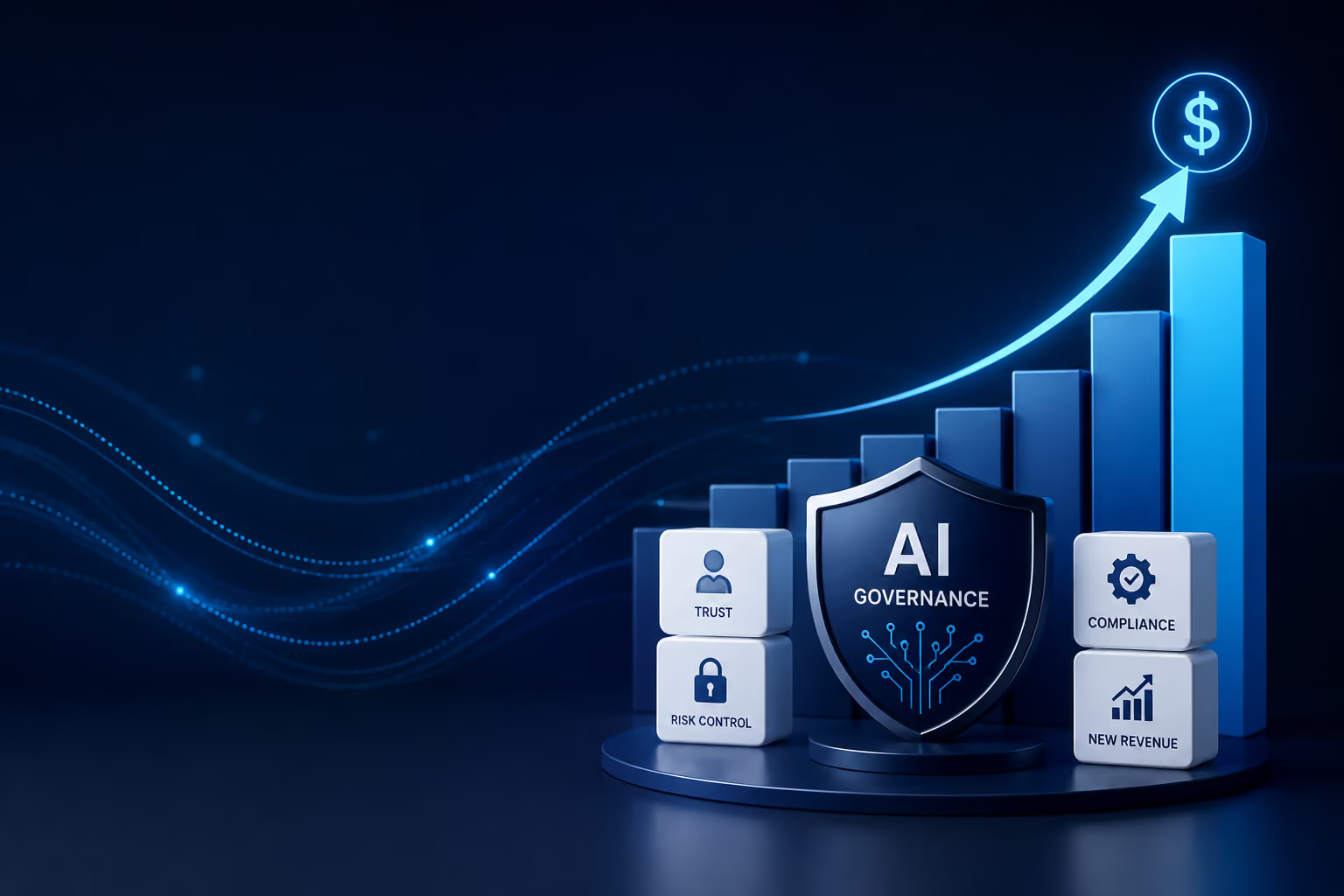
How MSPs Can Build an AI Governance Practice in 90 Days
Artificial Intelligence is quickly becoming one of the most requested topics in client conversations. Customers want to know: Can employees use ChatGPT? How do we prevent data leakage? Which AI tools should we approve? What policies do we need? How do we monitor AI usage?
Unfortunately, most organizations don't have answers. Even more importantly, many MSPs don't have a structured AI offering to help them. This creates a significant opportunity. Just as MSPs built practices around cybersecurity, compliance, cloud migration, and vCISO services, they can now build dedicated AI governance offerings that help customers adopt AI safely while creating new recurring revenue streams.
The good news? You don't need a team of AI researchers or data scientists to get started. You simply need a framework.
Why AI Governance Is Becoming a Managed Service
Most SMBs are already experimenting with AI, using ChatGPT, Microsoft Copilot, Gemini, AI-powered SaaS applications, and AI browser extensions. The challenge is that AI adoption often happens without visibility or oversight. This creates what many organizations are now discovering as Shadow AI.
As adoption increases, business leaders begin asking questions about risk, compliance, and governance. Those questions naturally land with their MSP — creating a new advisory opportunity that most competitors have not yet formalized.
The Business Opportunity for MSPs
Many MSPs focus primarily on technical services. AI governance expands the conversation into business outcomes. Instead of discussing endpoints, firewalls, and patch management, you begin discussing business risk, data protection, governance, compliance, and AI adoption strategy.
This moves the MSP relationship higher within the organization. Instead of only engaging IT contacts, MSPs gain access to CEOs, CFOs, operations leaders, compliance teams, and executive leadership. Higher-level conversations typically lead to higher-value engagements.
A 90-Day Framework for Building an AI Governance Practice
Phase 1 (Days 1–30): Establish Visibility Before you can govern AI, you need to understand how it's being used — this is where most customer engagements should begin. Offer an AI Visibility Assessment that answers which AI tools are in use, who is using them, how frequently, which departments have adopted AI, and where potential risks are emerging.
This assessment becomes the foundation for every future engagement. Organizations are often surprised by what they discover, many customers who believe they have little AI adoption uncover dozens of AI applications in active use. This is also a natural opportunity to introduce AI Detection and Response (AIDR) capabilities.
Deliverables: AI Usage Report, Shadow AI Findings, Risk Summary, Executive Briefing
Phase 2 (Days 31–60): Create Governance Policies Once visibility exists, governance becomes possible. Help customers establish practical policies around:
- Approved AI Applications — Define which AI platforms employees can use (Microsoft Copilot, ChatGPT Enterprise, Google Gemini, industry-specific AI solutions).
- Data Handling Rules — Establish guidelines for customer information, financial data, intellectual property, and confidential documents.
- Acceptable Use Policies — Create clear expectations regarding appropriate AI usage, prohibited activities, and security responsibilities.
The goal is not to block AI — it's to create safe adoption pathways. Organizations that attempt to prohibit AI entirely often create more risk through unmanaged Shadow AI.
Deliverables: AI Governance Policy, AI Acceptable Use Policy, AI Risk Guidelines, Employee Training Materials
Phase 3 (Days 61–90): Launch Managed AI Governance Services Once policies exist, customers need ongoing support, this creates recurring revenue opportunities. Offer AI Monitoring Services (continuous visibility into usage trends), AI Risk Reviews (quarterly assessments of emerging risks), AI Policy Enforcement (monitoring for violations), AI Governance Reporting (executive dashboards and reviews), and AI Detection and Response (ongoing detection, investigation, and response to AI-related events).
This is where MSPs transition from consulting engagements into recurring managed services.
Packaging AI Governance Services
Most MSPs should create three service tiers.
Tier 1: AI Readiness Assessment — A one-time engagement including AI discovery, Shadow AI assessment, and an executive report. Ideal for customers beginning their AI journey.
Tier 2: AI Governance Program — Includes assessment, policy development, employee training, and a governance framework. Ideal for compliance-focused organizations.
Tier 3: Managed AI Governance — Includes continuous monitoring, AI Detection & Response, quarterly reviews, governance reporting, and policy updates. Ideal for customers seeking ongoing oversight.
Common Customer Questions MSPs Should Be Prepared to Answer
"Should We Allow ChatGPT?" — The better question is "What controls should we implement around AI usage?" Governance is generally more effective than prohibition.
"How Do We Know What Employees Are Using?" — Visibility tools and AI monitoring platforms can provide answers.
"What About Compliance?" — Organizations should align AI governance with existing compliance frameworks and security policies.
"Who Owns AI Governance?" — The most successful organizations treat AI governance as a shared responsibility between leadership, IT, security, compliance, and operations.
Why MSPs Should Start Now
AI adoption is accelerating, and most organizations are still in the early stages of governance. This creates a short window where MSPs can establish themselves as trusted advisors before the market becomes crowded. The same MSPs that successfully built cybersecurity practices over the last decade have an opportunity to become leaders in AI governance over the next decade. Those who move early will have a significant advantage.
The Future of AI Governance Services
Over the next several years, AI governance will become as common as security assessments, compliance reviews, security awareness training, and risk management programs. Customers will increasingly expect guidance around AI usage, security, compliance, policy development, and risk management. MSPs that build expertise now will be positioned to capture that demand.
Final Thoughts
AI adoption is no longer a future initiative. It's happening today inside virtually every organization. Businesses need help understanding how AI is being used, what risks exist, and how governance can be implemented without slowing innovation.
For MSPs, this creates an opportunity to build new advisory services, deepen customer relationships, and generate recurring revenue. The organizations that become trusted AI advisors today will be the ones leading AI governance conversations tomorrow.
FAQs
Find answers to the most common questions about AI detection and response (AIDR), how it works, and why it matters for modern MSPs.